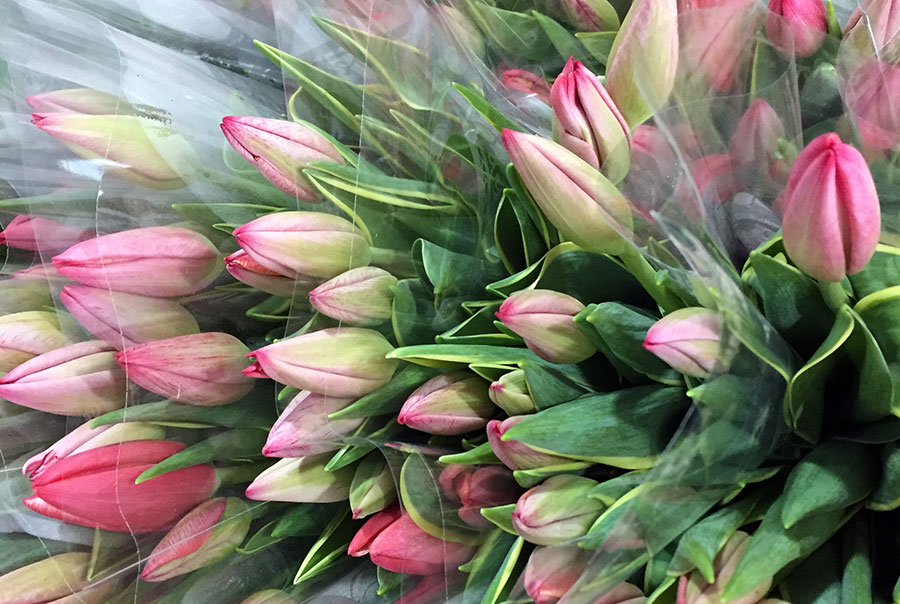
Every spring, thousands of people head to the Skagit Valley to see seemingly endless rows of colorful tulips.
We’re usually among them.
The Skagit Valley Tulip Festival has long been one of our favorite spring traditions. We try to make it up whenever we can. It’s a fun day out, and there are few better places around Seattle to bring a camera when the tulips are in bloom.
But on one visit, my dad and I got to see a side of tulip season most visitors never do.
We were invited behind the scenes at RoozenGaarde to see what happens beyond the colorful display gardens and fields, including how fresh-cut tulips make their way from the farm toward their next destination.
And as you might imagine, there are tons of tulips!
Behind the Scenes at RoozenGaarde
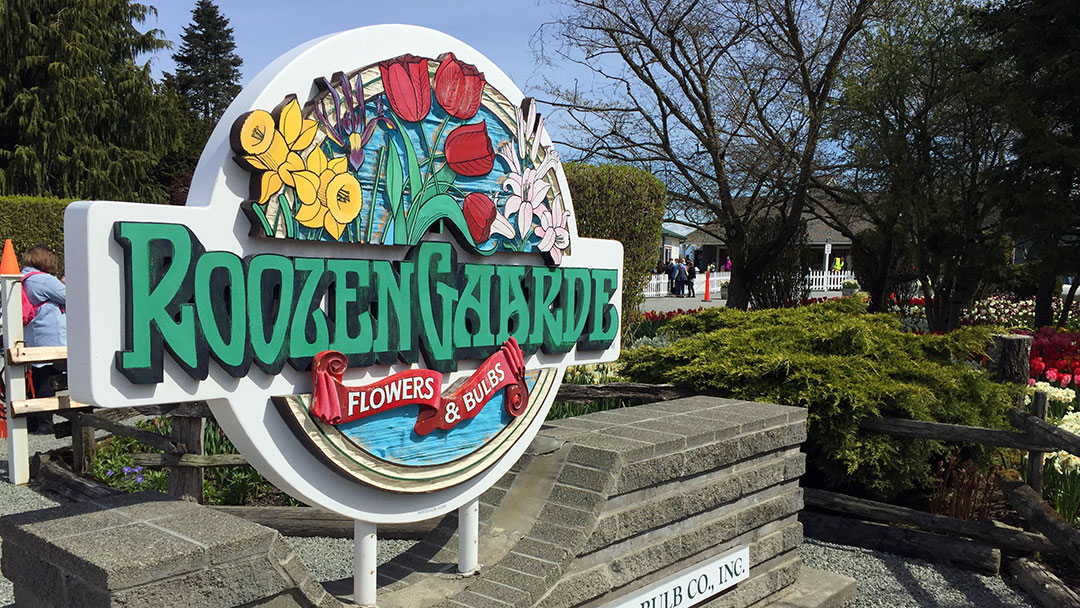
Most people know RoozenGaarde for its enormous fields of tulips and a more than five-acre display garden near Mount Vernon. During peak bloom, it’s the most popular stop during the Skagit Valley Tulip Festival.
But the flowers visitors love and adore outside are only part of the operation.
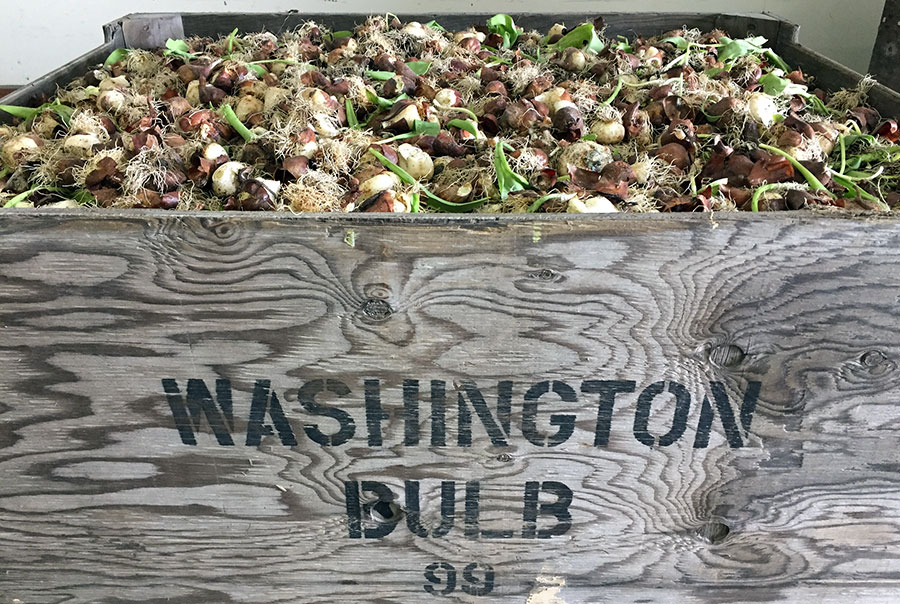
RoozenGaarde is part of Washington Bulb Company, which grows fresh-cut flowers year-round in greenhouses and seasonally across farmland in the Skagit Valley. Those flowers don’t just stay in Washington, either. Fresh-cut tulips and bulbs from the farm are shipped to customers across the country.
Seeing the operation up close gave us a completely different appreciation for how much work goes into all those flowers.
From the Tulip Fields to Fresh-Cut Flowers
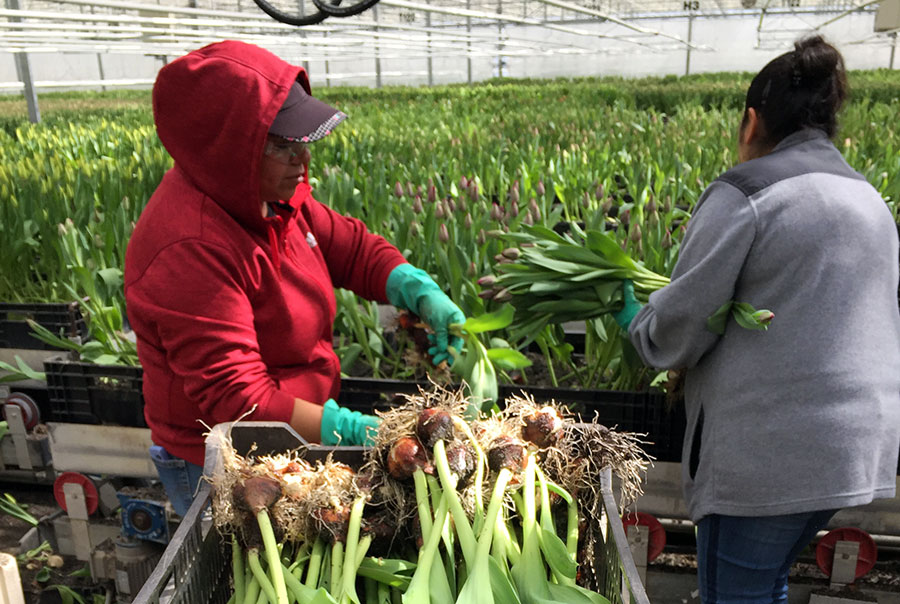
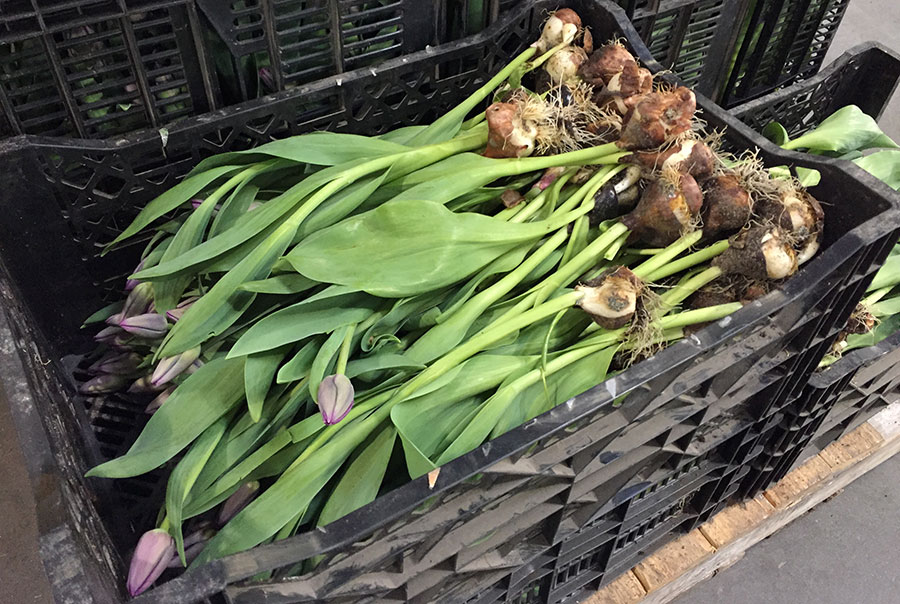
One thing that struck me was seeing the tulips arrive with their bulbs and roots still attached.
When you see tulips in a vase, it’s easy to forget what they looked like just a short time earlier.
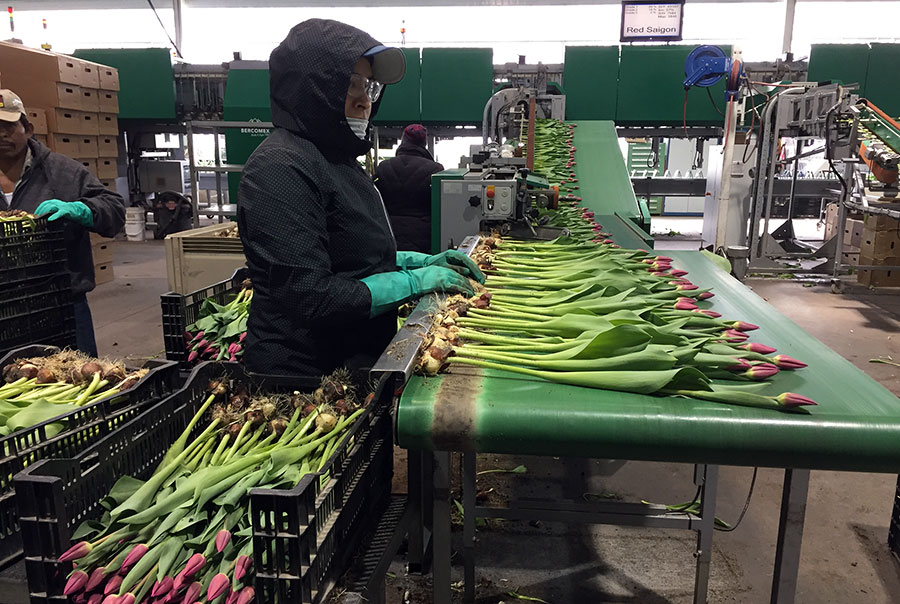
Behind the scenes, we watched workers handle crates filled with freshly harvested tulips and move flowers through the processing operation. Everywhere we looked, another batch of tulips waited its turn.
Some still had dirt-covered bulbs attached. Others lined the processing equipment in remarkably neat rows. Nearby, countless tulips stood together waiting for the next step.
It was tulip season on a completely different scale.
And as workers processed thousands of tulips inside, thousands more waited in the fields for their turn.
Getting the Tulips Ready to Go
Eventually, the flowers begin to resemble the tulips we see in bouquets and vases.
We watched workers sort and handle the flowers as they moved through the facility, and we saw bunches of fresh tulips ready to head out into the world.
RoozenGaarde ships fresh-cut flowers directly from its farm, including overnight shipments around the United States. Seeing the operation firsthand made the “farm to your home” journey feel a lot more literal.
One minute you’re looking at tulips with bulbs and roots still attached. Not long afterward, you’re looking at beautiful bunches of flowers ready for someone’s kitchen table.
A Different Side of Tulip Season
I’ve photographed the Skagit Valley tulip fields plenty of times over the years. That’s always going to be my favorite part of the festival.
There’s nothing quite like standing in front of rows and rows of tulips stretching across Skagit Valley.
But getting to go behind the scenes at RoozenGaarde with my dad gave me a new appreciation for everything happening beyond those fields.
The tulips are the stars each spring, but a whole lot of people work behind the scenes to make it happen.
Now, when we visit RoozenGaarde and see thousands upon thousands of tulips in bloom, I can’t help but think about where some of those flowers are headed next.
And just how much happens between the field and the vase.
If you love the Skagit Valley tulips, you’ll also love the daffodils that mark the first signs of spring in the Pacific Northwest.